Other projects
On this page you can find more information about my previous research projects.
Bayesian high redshift quasar selection
First master project, Leiden University
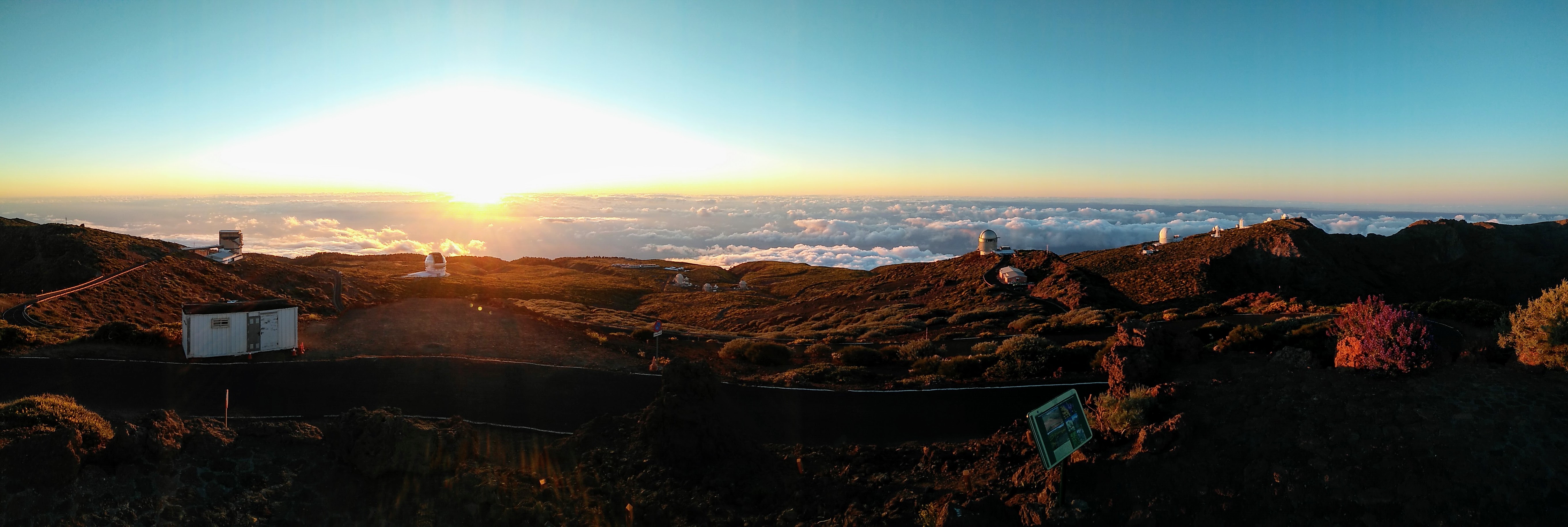
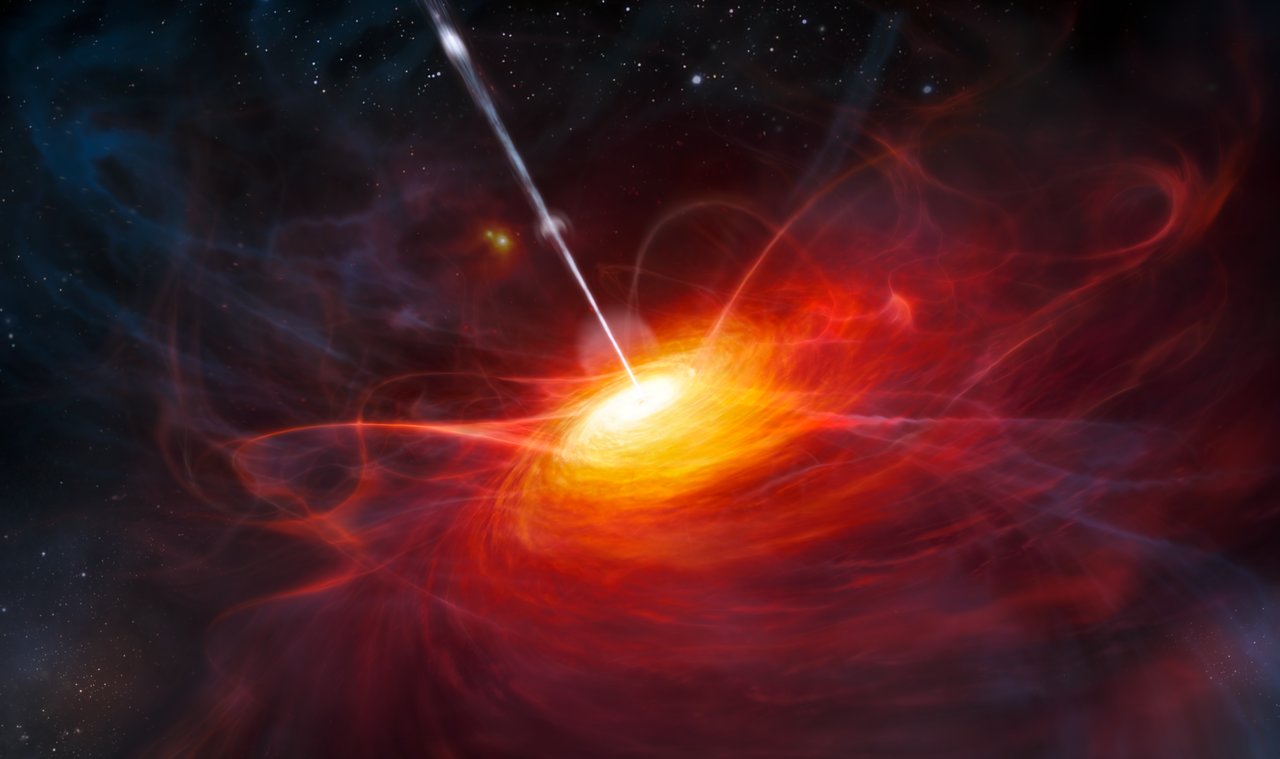
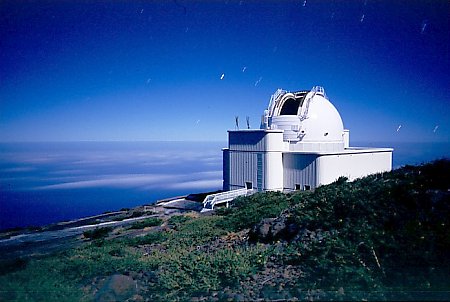
One of the most exciting frontiers in astronomy currently is in the era not long after the Big Bang where the first stars and galaxies are formed and the Universe lights up. Commonly referred to as the Epoch of Reionisation, the sources in this age are extremely difficult to observe due to their distance and faintness. One tried and true method is looking for quasars, which due to their extreme luminosities can be found in many large sky surveys. However for every quasar at these distances, there are thousands of sources to be sifted through, calling for effective methods of selecting them from large data sets. In my first master project, I worked on such a method, utilizing Bayesian statistics and machine learning techniques in order to effectively search for quasars at high redshifts. Using this method we selected a handful of promising sources for spectroscopic observation. For this part of the project we used the Isaac Newton Telescope (INT). This resulted in the discovery of a new bright quasar at a redshift 5.7!
Weak lensing power spectrum inference with KiDS
Second master project, Leiden University
One of the most promising ways to unravel the structure and evolution of the Universe is through the study of weak gravitational lensing. Light coming from distant galaxies travels through the matter distribution which through its gravity distorts the images of these galaxies ever so slightly. Though the distortions are indistinguishable from the regular structure for individual galaxies, looking at enormous amounts of galaxies we are able to extract the underlying cosmological structure. This requires advanced statistical methods, and the research I did in my second master project involved testing one of these methods on data from the Kilo Degree Survey (KiDS), a survey containing millions of galaxies.
Analysis of the Sz91 transition disk
Bachelor project, Leiden University
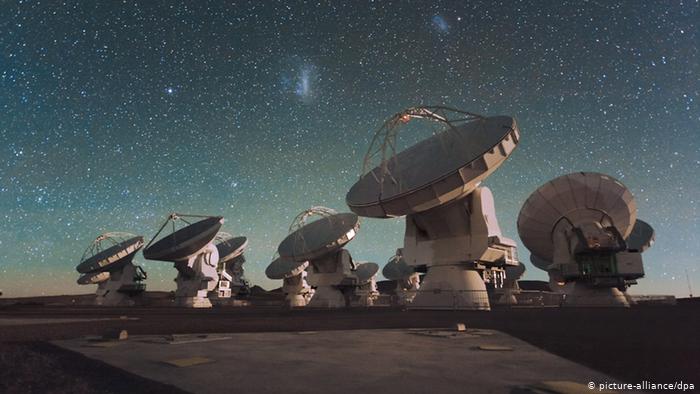
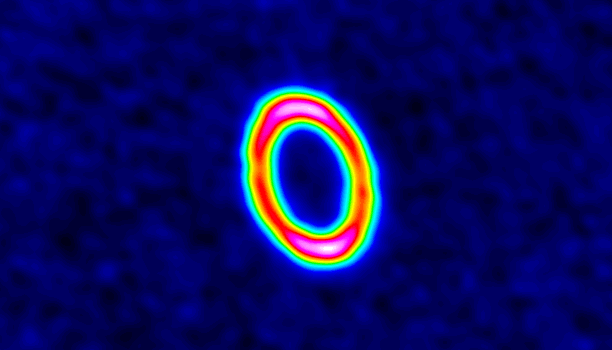
With the current generation of telescopes observations can be so sensitive that planetary systems can be detected in the early stages of their life. Called protoplanetary disks, the objects contain gas and dust, and studying them can give great insight into the formation of planetary systems like our solar system. In my bachelor research, I worked together with a fellow student on calibrating and analysing observational data from the Atacama Large Millimeter Array (ALMA) of the protoplanetary disk Sz91.